


In the known methods for manufacturing silicon carbide (SiC) single crystals, sublimation-recrystallization is commonly used. In this process, SiC powder is sublimated at temperatures above 2000°C, and single crystals are grown on a SiC seed. However, using impure black SiC powder in this method often results in the incorporation of impurities into the single crystal, leading to numerous crystal defects.
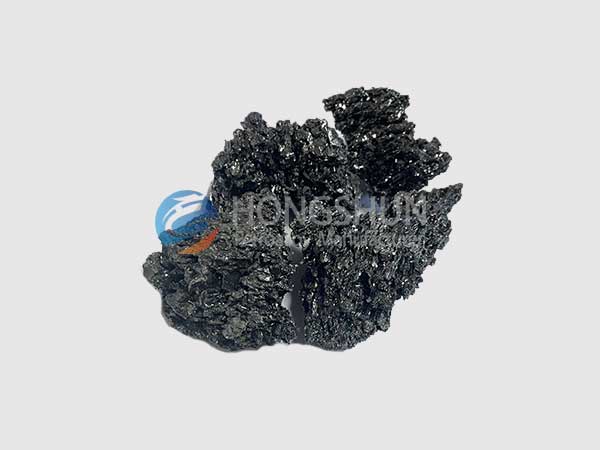

Methods for Manufacturing SiC Powder
The commonly used methods for producing SiC powder include the Acheson method and Chemical Vapor Deposition (CVD). The Acheson method yields black SiC powder with impurity issues, while the CVD method can produce high-purity SiC but has low productivity. Additionally, a method has been disclosed for manufacturing SiC powder with impurity content below 0.5 ppm by heating and reacting a mixture of a liquid silicon compound and an organic compound that produces carbon upon heating.
For the manufacture of SiC single crystals, the SiC powder needs to have a certain average particle size. The average particle size of black SiC powder is typically between 10-500μm. Common methods for producing black SiC powder include the CVD method, direct carburation of elemental silicon, and using organosilicons (such as TEOS, trimethylphenylsilane), phenolic resins, etc., to form a sol-gel followed by firing into SiC powder.
Characteristics of silicon carbide
Silicon carbide (SiC) is known for its high-temperature strength and excellent resistance to wear, oxidation, corrosion, and creep. SiC exists in two phases: the β phase with a cubic crystal structure, stable at temperatures between 1400°C to 1800°C, and the α phase with a hexagonal crystal structure, forming at temperatures above 2000°C.
SiC has been widely used as an industrial structural material and recently in the semiconductor industry. To use SiC for single crystal growth, the SiC powder needs to have a uniform particle size distribution.
Methods for Producing Black SiC Powder
The production methods for black SiC powder include the Acheson method, carbothermal reduction, and CVD. The SiC powder produced by these methods typically has low purity and requires additional high-purity processing and grinding.
High-purity granular SiC powder can be obtained by high-temperature heat treatment of refined fine SiC powder at 2000°C or higher. However, the particle size distribution of black SiC powder is uneven.
Characteristics of Black SiC Powder for Single Crystal Growth
To achieve high and stable sublimation rates in single crystal growth, the average particle size of black SiC powder should be between 100μm and 700μm, with a specific surface area between 0.05m²/g and 0.30m²/g. If the average particle size is less than 100μm or the specific surface area exceeds 0.30m²/g, the sublimation rate is initially fast but decreases as the powder sinters and the surface area decreases. Conversely, if the average particle size exceeds 700μm or the specific surface area is less than 0.05m²/g, the sublimation rate is also slow due to the small specific surface area of the SiC itself.
Methods for Producing Black SiC Powder for Single Crystal Manufacturing
Method I: SiC powder with an average particle size between 100μm and 700μm, and a specific surface area between 0.05m²/g and 0.30m²/g.
Method II: SiC powder formed by sintering primary particles with particle sizes between 5μm and 200μm.
Method III:
- Sinter black SiC powder with an average particle size below 20μm at 1900°C to 2400°C and under 70MPa pressure in a non-oxidizing atmosphere to obtain a sintered body with a density of 1.29g/cm³ (relative density of 40%) or higher.
- Crush the sintered body to adjust the particle size.
- Remove impurities by acid treatment.
Method IV: Heat a mixture of silicon source, carbon source, and 5%-50% by mass of SiC powder with an average particle size above 20μm at 1800°C to 2300°C in a non-oxidizing atmosphere to obtain SiC powder.
Method V:
- Heat metallic silicon and a carbon source with an average particle size between 100μm and 700μm at 1300°C to 1400°C in a non-oxidizing atmosphere to produce SiC powder.
- Further heat the obtained SiC powder at 1800°C to 2300°C in a non-oxidizing atmosphere for post-treatment.
Method VI: The carbon source is an organic compound. Before the heating and firing process of the SiC powder generation step, perform carbonization treatment of the organic compound at 500°C to 1000°C in a non-oxidizing atmosphere.
SiC powder for manufacturing single crystals must exhibit high and stable sublimation rates. Therefore, black SiC powder should have specific average particle sizes and surface areas to ensure stability and efficiency during the sublimation process.

