


In today’s steelmaking industry, aluminum-based deoxidizers such as aluminum granules and ferroaluminum are widely used. However, these traditional materials come with significant drawbacks:
- Formation of Al₂O₃ Inclusions:
Aluminum tends to form aluminum oxide (Al₂O₃) during deoxidation. These oxides have a high melting point and low buoyancy, making them difficult to float and remove. In continuous casting, they are especially prone to cause nozzle clogging, particularly at tundish outlets, which disrupts casting stability and affects billet quality. - Negative Impact on Steel Purity:
Al₂O₃ inclusions degrade steel properties, such as ductility, impact toughness, and fatigue life. These inclusions are especially problematic in producing clean steels and high-strength grades, where aluminum must be strictly controlled or avoided.
Given this challenge, Silicon Barium Calcium (Si-Ba-Ca) ferroalloy emerges as a promising aluminum-free composite deoxidizer. It is particularly suitable for steel grades that demand high cleanliness and are sensitive to aluminum inclusions, including:
- Continuous casting steel (especially low-carbon, low-silicon steels)
- High-strength and alloy structural steels
- Rail steels for mining, shipbuilding plates, pressure vessel steels, etc.

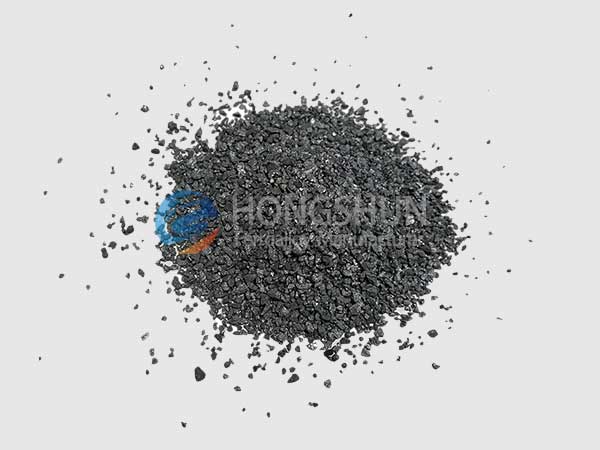
Silicon Barium Calcium Chemical Composition Range (wt%)
| Element | Content (%) |
|---|---|
| Si | 30–60 |
| Ba | 5–20 |
| Ca | 3–20 |
| Fe + impurities | Balance |
Silicon Barium Calcium Key Properties and Working Mechanisms
1. Al-Free, Eliminates Al₂O₃ Inclusions
Using Si-Ba-Ca avoids the formation of aluminum oxide inclusions entirely, improving steel purity and casting flow stability.
2. Strong Deoxidation and Desulfurization Ability
Both calcium and barium are highly reactive with oxygen and sulfur. They form low-melting-point silicates and sulfides, enhancing the removal of oxygen and sulfur from the melt.
3. Inclusion Modification and Grain Refinement
Barium helps transform non-metallic inclusions into spherical or modified forms, making them easier to float and remove.
The combined action of Ca and Ba promotes refined grain structures, improving steel uniformity and mechanical properties.
4. Excellent Physical Characteristics
With a low melting point (~1160°C) and high specific gravity (3.2g/cm³), the alloy is stable during storage and transport, and won’t disintegrate or powder over time.
Silicon Barium Calcium Production Process Overview
1. Raw Materials (adjusted based on target chemistry):
- Main materials: silica, barite (BaSO₄), celestite (SrSO₄), limestone/lime, steel scrap
- Reductants: coke, coal, charcoal
2. Smelting Process:
- Mix raw materials and reductants according to the designed proportion
- Feed into a submerged arc furnace (typically 3200kVA) for high-temperature reduction
- One-stage smelting yields stable, consistent Si-Ba-Ca ferroalloy
- After cooling, the alloy is crushed, screened, and packed for shipment
Silicon Barium Calcium Application Examples (Engineering Data)
| Steel Grade | Alloy Composition | Oxygen Content | Inclusion Characteristics | Mechanical Improvement |
|---|---|---|---|---|
| Q235-B | Si 47%, Ba 16%, Ca 5% | 16 ppm | Total inclusion 0.0019; spherical/compound; no Al₂O₃ | Grain size ≥ Grade 10; increased elongation |
| Heavy rail steel | Same as above | 15.6 ppm | Dispersed sulfide inclusions | Tensile ≥1030 MPa; Elongation ≥9% |
| 20MnSi | Same as above | 12 ppm | Dispersed oxides, partial sulfur-oxygen compounds | YS: 310–320 MPa; Elongation: 20–21% |
Silicon Barium Calcium Environmental and Operational Benefits
Compared to CaSi or pure Ca wire:
- Moderate calcium levels and barium-enhanced reactivity result in minimal smoke and dust, reducing workplace pollution
- Deoxidation products have low melting points and high fluidity, making slag removal more efficient and improving overall steelmaking productivity
Industrial Value of Si-Ba-Ca
Silicon Barium Calcium ferroalloy is a next-generation deoxidizer that offers a unique combination of strong deoxidation, desulfurization, inclusion control, grain refinement, and environmental safety. In China’s strategic push toward clean and high-quality steel production, Si-Ba-Ca has significant industrial application potential. It is well-positioned to partially or fully replace traditional aluminum-based deoxidizers and other products such as CaSi and FeCa, marking its role as a core material in modern steelmaking.

