
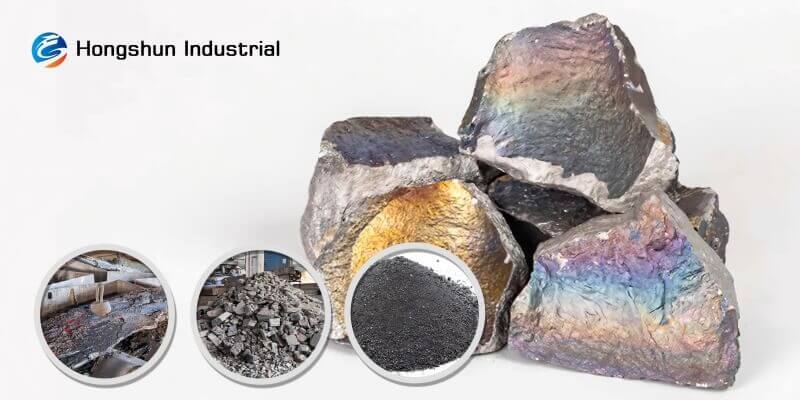

In the global ferroalloy industry, High Carbon Ferro Manganese (HC FeMn) remains one of the most widely consumed manganese alloys in steel production. As steel mills continue to optimize cost structures and improve smelting efficiency, demand for stable-quality FeMn 65/75 and FeMn 70 grades has remained strong across Asia, the Middle East, Europe, and South America.
Compared with low carbon alternatives, high carbon ferro manganese offers a cost-effective solution for deoxidation and alloying in carbon steel production. For buyers sourcing bulk ferro manganese, understanding composition ranges, performance characteristics, and supplier selection criteria is critical.
What Is High Carbon Ferro Manganese?
High Carbon Ferro Manganese is an iron-manganese alloy produced by smelting manganese ore in a submerged arc furnace. It typically contains:
- Manganese (Mn): 65–80%
- Carbon (C): 6–8%
- Silicon (Si): ≤1.5%
- Phosphorus (P): Controlled to meet steel grade standards
The most commonly traded grades in the international market include:
- FeMn 65/75
- FeMn 70
- FeMn 75
HC FeMn is primarily used as both a deoxidizer and alloying agent in steelmaking. The relatively high carbon content makes it suitable for carbon steel and structural steel production, where ultra-low carbon control is not required.


Why High Carbon Ferro Manganese Is Essential in Steelmaking
In modern converter and electric arc furnace operations, manganese plays several important roles:
1. Deoxidation Effect
During steelmaking, oxygen must be removed to improve steel quality. High Carbon FeMn reacts with oxygen to form manganese oxide, which enters the slag phase. This helps reduce blowholes and internal defects.
2. Sulfur Control
Manganese combines with sulfur to form manganese sulfide, minimizing hot shortness and improving hot working performance.
3. Strength and Toughness Enhancement
Manganese increases tensile strength and hardness while maintaining ductility. It is especially important in structural steel, rebar, and heavy plate production.
For this reason, ferro manganese for steelmaking remains a core raw material in the global carbon steel industry.
High Carbon FeMn vs Low Carbon FeMn
Buyers often compare High Carbon Ferro Manganese and Low Carbon Ferro Manganese before purchasing.
| Item | High Carbon FeMn | Low Carbon FeMn |
|---|---|---|
| Carbon Content | 6–8% | ≤0.5% |
| Price Level | Lower | Higher |
| Main Use | Carbon steel | Low carbon & alloy steel |
| Production Cost | Relatively low | More complex refining |
For standard construction steel and general engineering steel, high carbon ferro manganese price per ton remains more competitive, making it the preferred option for bulk purchasing.
Production Process of Ferro Manganese
High Carbon FeMn is produced in submerged arc furnaces by reducing manganese ore with coke and flux materials.
The basic steps include:
- Raw material proportioning
- Electric furnace smelting
- Slag separation
- Casting into lumps
- Crushing and screening (10–50mm, 10–100mm, customized sizes)
Energy cost and manganese ore price largely determine the final ferro manganese price today in the global market.
Major producing countries include China, India, South Africa, and Malaysia. China remains one of the largest exporters due to its mature smelting infrastructure and stable output capacity.
Global Market Trends of High Carbon Ferro Manganese
In recent years, several trends have shaped the market:
- Environmental policies affecting high-energy smelting plants
- Fluctuation of manganese ore prices
- Increasing demand from the infrastructure and automotive sectors
- Logistics cost volatility
As a result, ferro manganese FOB China prices often move in line with raw material and electricity costs.
For bulk buyers, long-term supply agreements with reliable ferro manganese manufacturers help stabilize procurement risk.
Key Specifications Buyers Should Check
When sourcing FeMn alloy, international customers usually focus on:
- Mn percentage stability
- Carbon content range
- Phosphorus control
- Particle size uniformity
- Moisture content
- Packing method (1MT jumbo bags or bulk)
A professional ferro manganese supplier will provide:
- Mill test certificates
- Third-party inspection reports
- Stable batch consistency
- Export documentation support
Consistency is more important than simply the lowest price.
Applications Beyond Carbon Steel
Although mainly used in steelmaking, High Carbon FeMn also serves:
- Foundry cast iron production
- Alloy steel manufacturing
- Wear-resistant steel
- Rail steel
- Shipbuilding plates
In foundry applications, manganese improves hardness and reduces casting defects.
How to Choose a Reliable Ferro Manganese Manufacturer
For international buyers, selecting the right supplier directly impacts production stability.
Here are practical evaluation points:
- Smelting capacity and furnace scale
- Long-term manganese ore sourcing channels
- Quality control process
- Export experience
- Delivery lead time stability
China ferro manganese suppliers with stable power resources and long-term ore contracts usually offer more competitive pricing and faster shipment.
Conclusion
High Carbon Ferro Manganese remains a fundamental alloy in the global steel industry. Its balance of cost efficiency, strong deoxidation performance, and strengthening capability makes it irreplaceable in carbon steel production.
For buyers searching for:
- High Carbon Ferro Manganese supplier
- FeMn 65/75 manufacturer
- Ferro Manganese price per ton
- Bulk FeMn exporter
Working with an experienced and stable manufacturer ensures not only competitive pricing but also long-term production security.
As global steel demand continues to grow in infrastructure and manufacturing sectors, the role of HC FeMn will remain strategically important in 2026 and beyond.

