


Ferro silicon nitride (Fe-Si3N4) is a novel nitride-based raw material synthesized at high temperatures using nitriding technology. This new silicon nitride refractory material was successfully developed in Japan in the 1970s. It is produced by heating ferrosilicon alloy powder in a nitrogen atmosphere at temperatures ranging from 1200 to 1400°C. The main component of the product is 75% to 80% (by weight) silicon nitride, with additional free iron and unreacted FeSi. Since then, many countries have conducted research on ferrosilicon nitride.
Due to its excellent high-temperature properties, resistance to corrosion and wear, sinterability, high thermal conductivity, and low thermal expansion coefficient, ferrosilicon nitride is widely used not only in blast furnace taphole clay but also in carbon-containing refractories, high-temperature structural materials, and magnesia-based castables, among other refractory materials. This paper systematically introduces the research progress on the properties, preparation, and applications of ferrosilicon nitride in refractories, providing some references for the research and application of Fe-Si3N4.
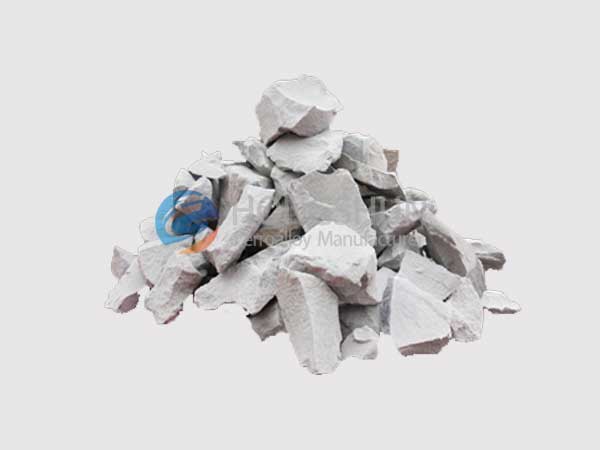

Properties of Ferrosilicon Nitride
Ferrosilicon nitride for refractory materials is a gray-white (or tan) powder, while the material used in steelmaking is a gray-white granular substance. Ferrosilicon nitride is a mixture of silicon nitride and iron, typically containing 75% to 80% Si3N4, 12% to 17% Fe, and free Si not exceeding 1%. The Si3N4 in ferrosilicon nitride exists in both α and β crystalline forms, both hexagonal crystals, and the iron exists in the form of α-Fe or iron silicides.
Different synthesis methods result in variations in the phase composition, structure, and properties of ferrosilicon nitride. For example, ferrosilicon nitride synthesized using flash combustion consists of β-Si3N4, α-Si3N4, Fe3Si, and a small amount of SiO2. Its structure contains a large number of high aspect ratio columnar silicon nitride crystals, with Fe3Si enclosed within the columnar crystals, forming an inclusion structure that is loose and highly active. In contrast, ferrosilicon nitride synthesized by self-propagating high-temperature synthesis consists of β-Si3N4, α-Si3N4, Fe3Si, and Si2N2O. Its microstructure is a dense silicon nitride block covered with an oxynitride film on the surface, with fine silicon nitride crystals in the gaps and iron components embedded in the dense block, resulting in a stable structure.
Fe-Si3N4 contains high-temperature silicon nitride phases, providing excellent high-temperature properties, and plastic iron phases, which promote sintering and improve the oxidation resistance of Si3N4. Fe-Si3N4 powder is mostly used as an additive in refractory materials, typically with a particle size of ≤0.074mm, and in some cases, ≤0.045mm.
Preparation Methods of Ferrosilicon Nitride
1. Direct Nitriding Method
The direct nitriding method involves nitriding ferrosilicon powder and silicon powder at high temperatures in a nitrogen atmosphere to produce ferrosilicon nitride powder. For example, in the invention “Method for Producing Ferrosilicon Nitride,” silicon powder and ferrosilicon powder are used as raw materials and nitrided at 1000 to 1400°C with a heating rate higher than 10°C·h^-1 in a nitrogen atmosphere. The direct nitriding method requires high temperatures and long durations. To reduce nitriding temperature and time, mechanical chemical methods can be used to treat the raw materials or pre-treatment followed by further adjustment of the firing regime can be applied. Studies have shown that the particle size of the ferrosilicon powder significantly affects the nitriding efficiency, with finer powders (d50=5.229μm) reacting quickly and violently, leading to severe sintering and poor nitriding results, whereas coarser powders (d50=13.41μm) show better nitriding performance.
The advantages of the direct nitriding method include its simplicity and low equipment requirements, while its disadvantages are low nitriding rates, long nitriding times, and high energy consumption. To obtain high β-Si3N4 content, long-term high-temperature nitriding is necessary, significantly increasing energy consumption.
2. Self-Propagating High-Temperature Synthesis
Mixed ferrosilicon powder (0.5-40μm) and ferrosilicon nitride powder (0.3-40μm, diluent) in a mass ratio of (1-10):(1-6) or mixed ferrosilicon powder, silicon powder (0.3-30μm), and ferrosilicon nitride powder in a mass ratio of (~10)(~6)(1-6). Adding additives and applying 3-15MPa nitrogen, ferrosilicon nitride powder was synthesized in a high-pressure vessel through self-propagating high-temperature synthesis. The main phase of the synthesized ferrosilicon nitride is Si3N4, primarily the β-phase, accounting for 72% to 80%, with 11% to 14% iron by weight, and is gray-white in color. Adding certain amounts of diluents and solid additives can increase the nitriding rate of ferrosilicon alloy to 100%.
This method requires high pressure and must be performed in a high-pressure vessel. To reduce pressure, mechanical activation can be used to reduce powder particle size, refine grains, increase reaction activity, and add inexpensive reaction aids, lowering nitrogen pressure to 0.01-1MPa.
Compared to the direct nitriding method, this method has low energy consumption, as it only requires energy to initiate the combustion synthesis reaction. It is efficient and does not require pre-pressing blocks. The reaction occurs in carbon felt cylindrical and disc-shaped containers, and the added additives help slow the reaction speed, reduce impurities in the reaction system, and improve the conversion rate of ferrosilicon while promoting a loose structure of the combustion products. However, the disadvantages include the high pressure required and the strict operational procedures, as the nitriding reaction is difficult to control once combustion is ignited.
3. Flash Combustion Synthesis Method
Used fine ferrosilicon powder with a particle size of ≤0.088mm as raw material and prepared fine honeycomb-shaped ferrosilicon nitride using the flash combustion synthesis method at 0.2MPa nitrogen pressure and 1400°C. By adjusting the ratio of raw materials to diluents, feeding speed, and the pressure, flow rate, and velocity of nitrogen, the flash combustion synthesis temperature was controlled around 1400°C, with nitrogen pressure maintained at 0.2MPa. The primary crystalline phase of the synthesized ferrosilicon nitride is β-Si3N4, a short-column crystal, with α-Si3N4, SiO2, Fe3Si, and a small amount of Al0.5FeSi0.5 also present. The raw ferrosilicon material significantly affects the size and distribution of iron particles in the synthesized ferrosilicon nitride, and fine, uniformly distributed iron particles can be achieved by using fine and uniform ferrosilicon raw materials.
The advantages of this method include the ability to rapidly, continuously, and cost-effectively produce high-quality ferrosilicon nitride in large quantities at atmospheric pressure, and the absence of free Si in the synthesized Fe-Si3N4.
4. Microwave Synthesis Method
Placed ferrosilicon powder with a particle size of less than 0.5mm into a microwave synthesis reaction chamber, added ammonium-containing additives, and mixed uniformly. The mixture was subjected to microwave synthesis (microwave frequency of 0.3-300GHz, pressure of 0.1-0.12MPa, synthesis temperature of 800-1800°C, and synthesis time of 0.5-3h) in a nitrogen atmosphere, and the resulting product was cooled to obtain ferrosilicon nitride. This method allows for the synthesis of ferrosilicon nitride at lower temperatures and shorter times under lower nitrogen pressures. The process improvements overcome the need for large amounts of diluents and seed crystals in conventional methods, improving synthesis efficiency. This method is more suitable for laboratory-scale small-batch synthesis of ferrosilicon nitride.
5. Carbothermal Reduction and Nitriding
Used iron concentrate powder, quartz powder, and coke powder (all with particle sizes less than 0.3mm) as the main raw materials, along with a room-temperature binder, mixed in appropriate proportions. The mixture was subjected to carbothermal reduction and nitriding sintering at suitable temperatures, and the product was cooled, crushed, and ground to obtain high-performance Fe-Si3N4 refractory raw material applicable to various taphole clays. The best conditions found in the literature include an excess of 50% coke by weight and sintering at 1450°C for 3 hours. Under these conditions, the primary phases of the synthesized Fe-Si3N4 composite material are β-Si3N4, β-SiC, and Fe3Si
The main raw materials used in this method are relatively inexpensive quartz powder, iron ore powder, and coke powder, and the energy consumption during preparation is low. However, due to the low purity of the raw materials, the synthesized product contains many impurities. Therefore, the Fe-Si3N4 powder synthesized by this method is only suitable for taphole clay refractory materials, and its application in other areas still requires further research.

