


Magnesium ingots are lightweight metal materials widely used in the production of magnesium alloys and aluminum alloys. Characterized by high specific strength, high stiffness, excellent vibration dampening, and cutting performance, magnesium ingots find extensive applications in aerospace, automotive manufacturing, and electronic products.
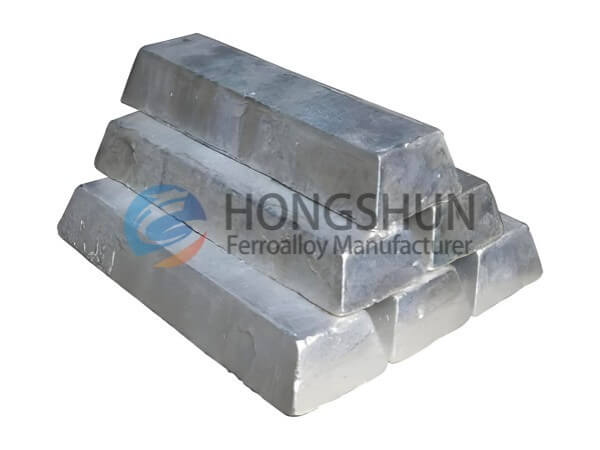

Physical and Chemical Properties of Magnesium Ingots
Magnesium ingots have a density of about two-thirds that of aluminum, making them ideal lightweight metal materials. They exhibit chemical stability and low reactivity with other metals, along with excellent corrosion resistance. Magnesium ingots also possess high thermal conductivity and good casting properties, which enhance their utility in thermal management and complex-shaped part manufacturing.
Applications of Magnesium Ingots
The applications of magnesium ingots span several industries, including:
- Aerospace: Due to their low density and high strength, magnesium alloys are widely used in aircraft and spacecraft structural components, contributing to reduced fuel consumption and increased payload capacity.
- Automotive Industry: Magnesium alloys are favored for their excellent mechanical properties and weight advantages, finding use in engine hoods, seat frames, and wheel rims, gradually replacing traditional steel and plastic parts.
- Consumer Electronics: Magnesium alloy casings are prevalent in mobile phones, laptops, and other consumer electronic devices, providing strength and durability while reducing overall weight.
- Military and Defense: Magnesium ingots are utilized in lightweight, high-strength structural components for military equipment, enhancing mobility and durability.
Major Uses of Magnesium Ingots
The primary applications of metallic magnesium include:
- Alloying Element for Magnesium Alloys: Magnesium ingots serve as the foundational material for producing high-strength lightweight alloys.
- Aluminum Alloy Component: As a crucial alloying element in aluminum alloys, magnesium improves strength and corrosion resistance and is widely used in die-casting processes.
- Desulfurizing Agent in Steel Production: Magnesium ingots can be added as a desulfurizing agent during steelmaking to enhance steel quality.
- Production of Titanium via the Kroll Process: Magnesium acts as a reducing agent in titanium extraction processes.
- Production of Nodular Graphite in Cast Iron: Used as an additive in the production of nodular graphite, improving cast iron properties. (Ferro Silicon Magnesium Nodulizer)
- Sacrificial Anodes: Employed to protect underground storage tanks, pipelines, underground structures, and water heaters from corrosion.
- Reducing Agent: Utilized in chemical reactions, particularly in extracting uranium and other metals from salts.
Production Process of Magnesium Ingots
The production of magnesium ingots involves several key steps:
- Raw Material Preparation: Dolomite is crushed into fine materials (30-40mm) and then sintered in a rotary kiln to obtain calcined dolomite.
- Cooling and Milling: After cooling, the calcined dolomite is milled into powder and then shaped into pellets using a ball press.
- Mixing and Reduction: The pellets are uniformly mixed with ferro silicon powder (75% silicon) and fluorite powder and then formed into lumps. These lumps are placed in a heat-resistant stainless steel reduction tank and subjected to reduction in a furnace at 1200-1250°C under a vacuum of 1.33 Pa to produce crude magnesium.
- Refining and Casting: The crude magnesium undergoes solvent refining, casting, and surface treatment to yield high-purity magnesium ingots.
Economic Factors and Future Development of Magnesium Ingots
The pricing of magnesium ingots typically depends on raw material costs, production processes, and market demand. Due to their lightweight and high strength characteristics, magnesium ingots have significant potential for application in various sectors, especially in the context of promoting lightweight solutions in the automotive and aerospace industries.
With advancements in technology, the emergence of new processes, and innovative applications, the use of magnesium ingots is expected to expand further. Future demands in renewable energy and eco-friendly materials will likely drive the continued growth of magnesium ingots.

