


Silicon carbide (SiC) is widely used in industrial structural materials and the semiconductor industry due to its high-temperature strength, excellent wear resistance, oxidation resistance, corrosion resistance, and creep resistance. SiC exists in cubic crystal structure β-phase and hexagonal crystal structure α-phase, where the β-phase is stable at temperatures between 1400°C and 1800°C, and the α-phase forms at temperatures above 2000°C. For single crystal growth, SiC powder needs to have uniformly sized particulate black silicon carbide powder.
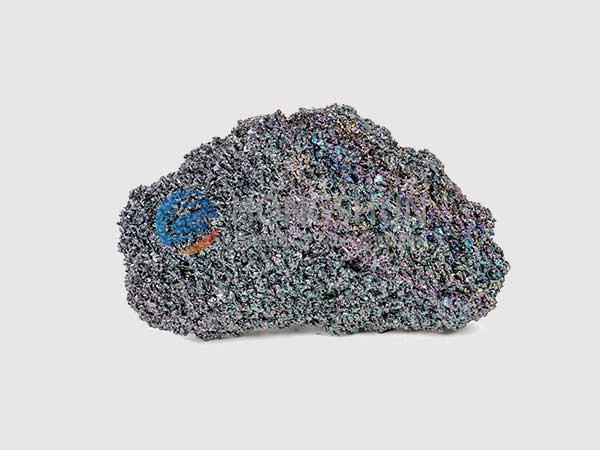

Black Silicon Carbide Powder Preparation Methods and Their Issues
1. Acheson Method:
- Advantages: Suitable for large-scale production.
- Disadvantages: High impurity content.
2. Chemical Vapor Deposition (CVD) Method:
- Advantages: Can obtain high-purity silicon carbide.
- Disadvantages: Expensive raw materials and equipment, low yield, not suitable for industrial mass production.
3. Liquid Silicon Compounds and Organic Compounds Mixing Method:
- Advantages: Impurity content below 0.5 ppm.
- Disadvantages: Many pre-treatment steps, complex process, easy to introduce impurities.
4. Direct Carbide of Elemental Silicon and Organic Silicon Compounds Method:
- Advantages: Relatively simple.
- Disadvantages: It is easy to introduce impurities and requires complex pre-treatment steps.
Issues in Single Crystal Growth Using Black Silicon Carbide Powder
In the sublimation recrystallization method, using black silicon carbide powder with many impurities leads to crystal defects due to impurities mixing into the crystal. Therefore, high-purity and uniformly sized black silicon carbide powder is needed. Under single crystal growth conditions, to maintain a stable sublimation rate, black silicon carbide powder must have a specific average particle size and specific surface area.
Methods for Preparing Black Silicon Carbide Powder
- Sintering Method: Sintering black silicon carbide powder with an average particle size below 20μm at 1900°C to 2400°C, under a non-oxidizing atmosphere and pressure below 70MPa, resulting in a sintered body with a density above 1.29g/cm³. This is followed by crushing and acid treatment to remove impurities.
- Mixed Heating Calcination Method: Heating a raw material mixture of silicon source, carbon source, and silicon carbide powder with an average particle size above 20μm at 1800°C to 2300°C, under a non-oxidizing atmosphere.
- Carbide Treatment Method: Heating metal silicon and carbon source with an average particle size between 100μm and 700μm at 1300°C to 1400°C, under a non-oxidizing atmosphere, followed by post-treatment heating at 1800°C to 2300°C.
- Organic Compound Carbonization Method: Heating organic compounds under a non-oxidizing atmosphere at 500°C to 1000°C for carbonization, followed by sintering.
High-purity, uniformly sized black silicon carbide powder with an appropriate specific surface area is crucial for single crystal growth. To exhibit high and stable sublimation rates in the sublimation recrystallization method, the average particle size of black silicon carbide powder should be between 100μm and 700μm, and the specific surface area should be between 0.05m²/g and 0.30m²/g. Various optimized methods can prepare black silicon carbide powder that meets these requirements, but controlling impurity content and particle size distribution is essential to ensure the quality and performance of the single crystals.

