


Silicon carbon alloy and silicon carbide both contain silicon and carbon, but they are two different materials with distinct structures, properties, and applications.
High carbon silicon
- High carbon silicon is an alloy material containing high levels of silicon and carbon, typically consisting mainly of silicon and carbon with small amounts of other elements such as iron and aluminum.
- Typical high carbon silicon alloys usually contain silicon content ranging from about 45% to 68%, while carbon content typically falls between 10% to 18%.
Silicon carbide (SiC)
- Silicon carbide is a ceramic material consisting of silicon and carbon without the presence of metallic elements.
- The chemical formula of silicon carbide is SiC, where silicon and carbon combine in equal molar proportions, meaning each silicon atom is paired with one carbon atom.
High carbon silicon and silicon carbide exhibit significant differences in silicon-carbon content. High carbon silicon is an alloy material with a higher proportion of silicon and carbon, while silicon carbide is a ceramic material strictly composed according to equal molar proportions of silicon and carbon.

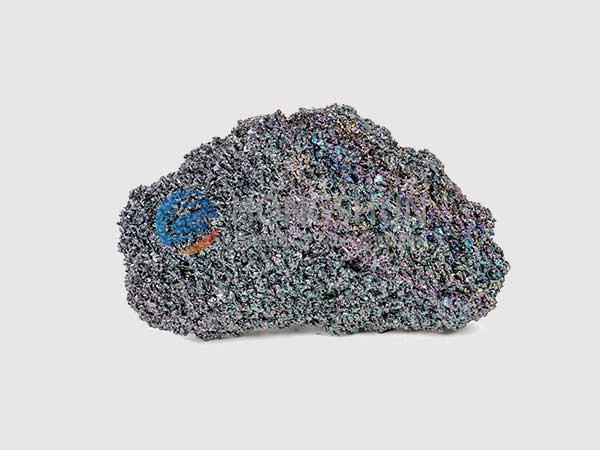
Production Processes and Applications of Silicon Carbide and Silicon Carbon Alloy
Silicon carbide (SiC) and silicon carbon alloy are two important materials with wide-ranging applications in the industrial sector. Silicon carbide is a ceramic material known for its excellent high-temperature and wear-resistant properties, whereas silicon carbon alloy is a metallic alloy used as an alloying agent to improve the performance of alloys such as steel.
Production Process of Silicon Carbide
The production of silicon carbide mainly involves two methods: carbothermal reduction and vapor-phase reaction.
- Carbothermal Reduction: This method involves a chemical reaction between graphite and silica at high temperatures to produce silicon carbide and carbon monoxide. The reaction typically occurs in an electric furnace or arc furnace, where temperatures can reach several thousand degrees Celsius. Graphite serves as the carbon source, while silica provides the silicon source, resulting in the formation of silicon carbide. This method produces high-purity silicon carbide suitable for advanced ceramics and electronic devices.
- Vapor-Phase Reaction: This method involves the gas-phase reaction of silicon and carbon sources to prepare silicon carbide. A typical vapor-phase reaction involves the reaction of silicon source (such as chlorosilanes) and carbon source (such as methane) at high temperatures to produce silicon carbide. The reaction products can be further purified and processed into different forms of silicon carbide products. Vapor-phase reaction method offers lower production costs and is suitable for large-scale industrial production.
Applications of Silicon Carbide
Silicon carbide finds wide-ranging applications due to its excellent high-temperature and wear-resistant properties:
- Refractory Materials: Silicon carbide can be used as high-temperature refractory materials, such as refractory bricks, coatings, etc., for the manufacture of furnace linings, kiln linings, and other refractory components.
- Abrasives and Grinding Tools: Silicon carbide particles can be used as abrasives and grinding tools for metal processing, grinding, and polishing processes.
- Electronics Devices: Silicon carbide exhibits excellent electrical properties and can be used to manufacture power semiconductor devices, optoelectronic devices, etc.
- Optical Devices: Silicon carbide has good optical properties and can be used to manufacture optical devices such as lasers, LED devices, etc.
Production Process of Silicon Carbon Alloy
The production process of silicon carbon alloy mainly involves two methods: arc furnace smelting and reduction process in steelmaking.
- Arc Furnace Smelting: This method involves heating and melting silicon ore and carbon-containing raw materials (such as coke, graphite, etc.) in an arc furnace to produce a reaction that generates silicon carbon alloy. The composition and properties of silicon carbon alloy can be adjusted by controlling parameters such as raw material proportions, furnace temperature, and reaction time.
- Reduction Process in Steelmaking: During steelmaking, silicon carbon alloy is often added as an alloying agent. These silicon carbon alloys can be prepared by adding silicon ore and carbon-containing raw materials such as coke to the smelting furnace, followed by a reduction reaction at high temperatures to dissolve silicon and carbon into the steel, thereby improving the steel’s performance.
Applications of Silicon Carbon Alloy
Silicon carbon alloy is an important alloying agent with the following applications:
- Steel Metallurgy: Silicon carbon alloy is used as an alloying agent in steel metallurgy to adjust the chemical composition of steel and improve its properties, such as hardness, wear resistance, etc.
- Foundry Industry: Silicon carbon alloy is also used in the foundry industry for alloy preparation, producing high-strength, high-hardness alloy castings.
- Chemical Industry: Silicon carbon alloy is used as a catalyst for certain chemical reactions in the chemical industry, improving reaction efficiency and product purity.
Research on silicon carbide and silicon carbon alloy will focus on the following aspects:
- Research on silicon carbide and silicon carbon alloy will focus on the following aspects:
- New Processes and Materials: Research and development of more energy-efficient and environmentally friendly production processes, as well as superior performance new silicon carbide and silicon carbon alloy materials.
- Expansion of Applications: Exploring the applications of silicon carbide and silicon carbon alloy in emerging fields such as energy storage, photovoltaic power generation, electric vehicles, etc.
- Intelligent Manufacturing and Digital Technology: Combining intelligent manufacturing and digital technology to improve the automation and production efficiency of the production process of silicon carbide and silicon carbon alloy.
In conclusion, silicon carbide and silicon carbon alloy play significant roles in industrial production and scientific research. Continuous innovation and development will contribute to the widespread application of silicon carbide and silicon carbon alloy materials in various fields, thus contributing to the development and progress of human society.
HS Ferroalloys is able to produce customized alloy products according to user-specific requirements, including ferrosilicon, high carbon silicon, silicon carbide, etc. We welcome inquiries about our products and invite interested parties to visit our facilities for more information.

