


Grinding balls are a critical component in the gold ore milling process. In gold processing plants, the efficiency and lifespan of grinding media directly impact both production costs and gold recovery rates. Therefore, choosing the right type of grinding ball is essential for optimizing performance and ensuring the cost-effectiveness of the entire operation.
In this article, we explore the most widely used grinding balls in gold ore processing, compare their properties, and help you determine which type is most suitable for your application.
Why Grinding Balls Matter in Gold Processing
Gold processing usually involves crushing and grinding raw ore to liberate gold particles. During this stage, grinding media—typically in the form of balls—are used to reduce the ore to a fine powder. These balls are used in SAG mills and ball mills to facilitate efficient ore breakdown.
The performance of grinding media affects:
- Milling efficiency
- Power consumption
- Liner wear
- Overall cost per ton processed
- Gold recovery rates
Choosing poor-quality grinding balls can lead to reduced efficiency, high wear, and even contamination of the final product.

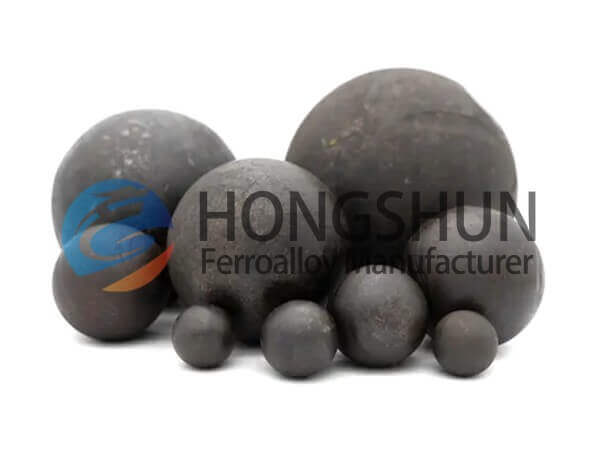
Common Types of Grinding Balls for Gold Mining
1. Forged Steel Grinding Balls
Overview:
Forged steel balls are manufactured by hot forging high-quality carbon or alloy steels. After forging, the balls undergo heat treatment to improve their hardness and toughness.
Key Features:
- High impact toughness
- Excellent wear resistance
- Uniform hardness throughout
- Ideal for large SAG and ball mills
Applications:
Forged grinding balls are most commonly used in gold mining operations with large ore bodies and aggressive milling conditions. Their resistance to breakage makes them suitable for high-impact environments.
Specifications:
- Diameter: 20mm to 150mm
- Hardness: HRC 55–65
- Composition: C, Mn, Cr, etc.
2. High Chrome Cast Grinding Balls
Overview:
High chromium cast balls are produced by casting molten steel with a high percentage of chromium content (typically 10–30%) into molds, followed by heat treatment.
Key Features:
- Higher hardness than forged balls
- Superior abrasion resistance
- Longer lifespan in fine grinding operations
- Suitable for dry grinding environments
Applications:
High chrome cast balls are ideal for secondary grinding stages or finer particle size reduction where impact is less and abrasion is more prevalent. This makes them a good fit for gold processing in ball mills where precision matters.
Specifications:
- Diameter: 17mm to 120mm
- Hardness: HRC 58–68
- Composition: Cr (10–30%), Fe, C, Si, Mn
3. Low Chrome Cast Balls
Overview:
These balls contain lower chromium content and are more economical than their high chrome counterparts. They are used in applications where cost savings are a priority.
Key Features:
- Moderate hardness
- Lower wear resistance compared to high chrome
- More affordable
Applications:
Low chrome cast balls may be suitable for less aggressive grinding environments or where budget constraints exist. However, they are generally not recommended for high-capacity or high-impact gold milling processes.
Comparison Table: Grinding Balls for Gold Ore Processing
| Type | Hardness (HRC) | Wear Resistance | Cost Efficiency | Recommended Use Case |
|---|---|---|---|---|
| Forged Steel Balls | 55–65 | High | High | Primary grinding (SAG, Ball Mill) |
| High Chrome Cast Balls | 58–68 | Very High | Moderate | Secondary grinding, fine ore |
| Low Chrome Cast Balls | 45–55 | Moderate | Very High | Low-cost, non-critical applications |
How to Select the Right Grinding Media for Gold Processing
When choosing grinding balls for a gold ore milling operation, consider the following factors:
- Ore Hardness:
Harder ores require grinding media with higher impact toughness (e.g., forged steel). - Mill Type:
SAG mills prefer larger, tougher balls. Ball mills may require smaller balls with higher precision. - Grinding Stage:
Primary grinding benefits from forged steel balls, while fine grinding may be better served with high chrome balls. - Cost vs. Performance:
Forged balls may be more expensive initially but last longer, reducing replacement costs. - Corrosion Resistance:
Chrome content helps resist corrosion, especially in wet grinding operations.
Wear-resistant Grinding Media Suppliers – Hongshun
In gold ore processing, selecting the appropriate grinding ball can significantly improve operational efficiency and lower costs. Forged steel balls are ideal for primary grinding due to their impact toughness, while high chrome cast balls are preferred for secondary and fine grinding thanks to their wear resistance.
Understanding your specific milling environment and ore characteristics will guide your selection of the best grinding media.
At Hongshun, we offer a wide range of wear-resistant grinding media tailored for gold and copper mines. Our forged and cast balls are engineered for performance, consistency, and cost-efficiency. Contact us for customized solutions and competitive pricing.

