
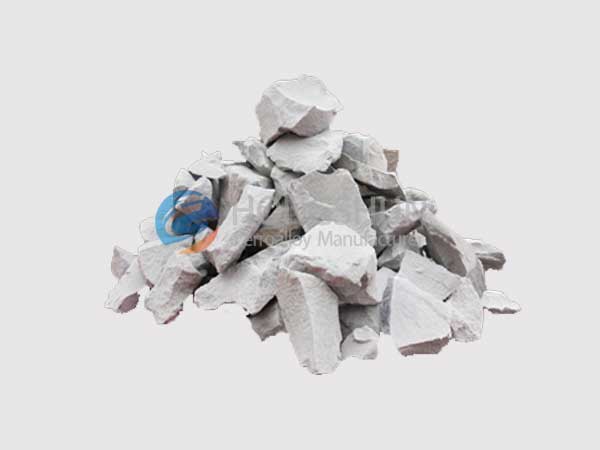
Ferrosilicon nitride is a mixture of Si3N4 as the main component, accompanied by free iron, non-ferrosilicon nitride and a small amount of other components. Refractory commercial ferric silicon nitride is a grayish white (or tawny) powder, and steelmaking ferric silicon nitride is a grayish white granular matter.
Powdered ferrosilicon nitride is mainly used in the tap hole of large blast furnaces, and a small amount is used in iron runner materials or other unshaped refractory materials. Granular ferrosilicon nitride is mainly used in silicon-oriented steel or other steels (Such as HRB400 rebar) that use nitrides to improve strength.
Ferrosilicon nitride composition
| Chemical composition(%) | |||||
| Element | SI3N4 | N | Si | Fe | Al+Ca |
| Content(%) | 70~75 | 28~30 | 47~51 | 12~16 | <2.5 |
| 75~80 | 30~33 | 49~53 | 12~16 | <2.5 | |
Advantages of ferrosilicon nitride
Ferro silicon nitride enhances the high-temperature strength and wear resistance of refractory materials, improves thermal stability and oxidation resistance, reduces the coefficient of thermal expansion, and increases thermal conductivity. Compared to traditional manganese and chromium alloys used for alloying, the consumption of ferro silicon nitride is much lower.
Types of Ferro silicon nitride
Depending on different classification methods, ferro silicon nitride can be categorized into various types.
Based on its application:
- Steelmaking-grade ferro silicon nitride: Requires a clean surface without visible impurities.
- Refractory-grade ferro silicon nitride: Typically has a particle size of 200 mesh, while stabilized refractory-grade ferro silicon nitride has a particle size of 325 mesh.
Based on physical properties:
- Ordinary refractory-grade ferro silicon nitride: Generally gray-white in color.
- Stabilized refractory-grade ferro silicon nitride: Dark brown in color.
- Both types of refractory-grade ferro silicon nitride should have a clean surface with no visible impurities. Steelmaking-grade ferro silicon nitride can be further divided into ordinary ferro silicon nitride and high-purity ferro silicon nitride.
Uses of ferrosilicon nitride
- Powdery ferrosilicon nitride is mainly used in the plug mud of large blast furnaces, and a small amount is used in iron groove material or other amorphous refractories.
- Granular ferrosilicon nitride is mainly used for oriented silicon steel or other steel with nitride strength (such as HRB400 rebar).
- Ferrosilicon nitride is also an additive for the production of cold rolled unidirectional silicon steel sheets. After adding metal melt, the product can obtain good temperature and low temperature strength, good corrosion resistance, thermal shock and wear resistance.
- Ferric silicon nitride is a new kind of high quality refractory material, which can be used in anhydrous sludge of large blast furnace instead of silicon nitride with higher price. It has the characteristics of good opening, sintering aid, corrosion resistance and low cost


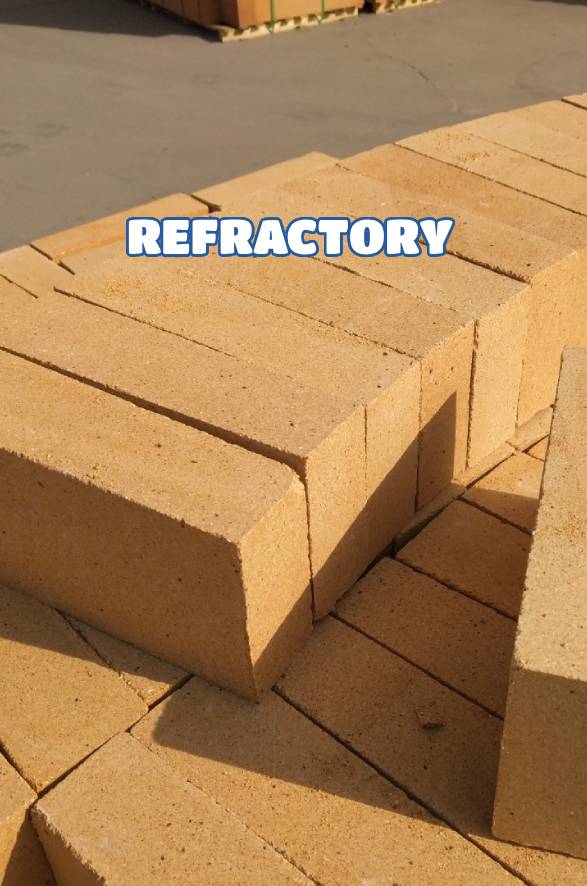
The Preparation Of Ferrosilicon Nitride
The preparation of ferrosilicon nitride typically involves synthesizing it from ferrosilicon alloy or monatomic silicon at high temperatures using nitriding technology. During the synthesis process, two main factors significantly impact the synthesis effectiveness:
Ferrosilicon granularity: The relationship between the nitrogen content of products with different particle sizes and the reaction temperature.
- Finer ferrosilicon particles result in smaller porosity in the sample and a larger specific surface area, leading to faster and more intense reactions. However, severe sintering between ferrosilicon particles can hinder nitrogen diffusion, affecting the nitriding effectiveness negatively.
- Coarse-grained samples exhibit a smaller specific surface area, resulting in a more stable nitriding reaction. As the temperature rises, nitriding becomes more efficient.
Nitriding temperature: High-temperature nitriding yields more complete results compared to low-temperature nitriding.
Why choose us


one-stop service


Application of ferrosilicon nitride
- Ferric silicon nitride is widely used in blast furnace blast mud in developed countries, which makes the plugging performance of blast mud obviously better, meets the need for blast furnace iron production, and becomes an indispensable component of modern blast furnace blast mud. In addition, adding a small amount of ferrosilicon nitride to the iron gully can greatly increase the iron content of the iron gully. Japan began using ferrosilicon nitride in the 1970s.
- The application time of ferrosilicon nitride in China is relatively short, Baosteel first added silicon nitride in cannon mud in 1994, so that the performance of cannon mud can meet the needs of Baosteel iron making. Other domestic steel mills are basically using ferrosilicon nitride, because the sales price of ferrosilicon nitride is about half of the sales price of silicon nitride, and the two are basically close in terms of performance. In the past three years, the country’s large iron and steel enterprises more than 2000M3 blast furnace plug mud basically use ferrosilicon nitride. The addition of iron silicon nitride slurry can meet the needs of large blast furnaces well, and the number of blast furnace iron production is generally reduced from 18 times to 12 times, and the low is reduced to 6 times. The consumption of gun-mud was reduced from 1.2kg/ ton iron to 0.5kg/ ton iron.
- In steelmaking, granular ferrosilicon nitride is initially used in the production of oriented silicon steel, which can stably supplement a certain amount of nitrogen for molten steel. The amount of ferrosilicon nitride used in China reaches hundreds of tons a year. The progress of smelting technology has made the production of micro alloyed steel develop rapidly in China. The reinforced microalloying elements of steel are mainly vanadium, niobium and titanium. After calculation and comparison and practical application, the production of HRB400 steel bars using FeV50+Fe Si3N4 microalloying scheme, alloying cost than the single use of FeV50 tons of steel cost reduced by 127.61 yuan, more stable than the use of traditional SiC, to create higher benefits.


