
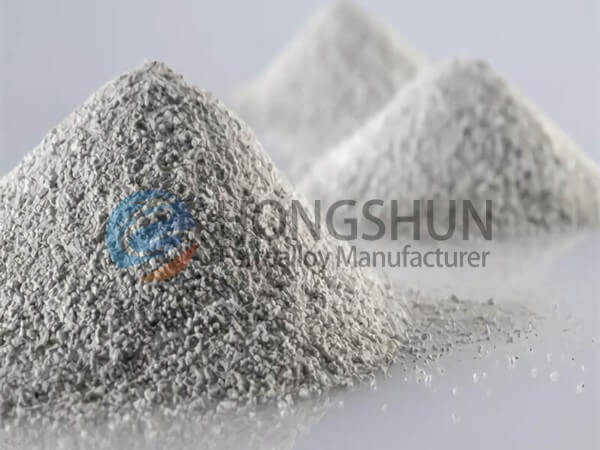
Silicon nitride (Si₃N₄) is a cutting-edge ceramic material known for its strength, durability, and resistance to high temperatures and corrosion. This advanced material is ideal for high-stress, high-temperature environments across various industries, from metallurgy to manufacturing. Other ferroalloys such as ferrosilicon nitride, ferrochrome nitride, and manganese nitride are supplied as well.
What is Silicon Nitride?
Silicon nitride (Si₃N₄) is a high-strength, gray-white powder produced by heating silicon powder in a nitrogen atmosphere or reacting silicon halides with ammonia. This durable compound is resistant to oxidation and doesn’t react with most acids, making it highly stable and ideal for extreme environments.
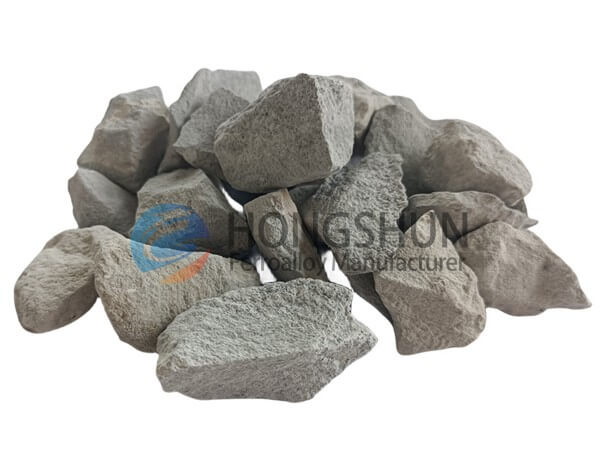
silicon nitride lumps
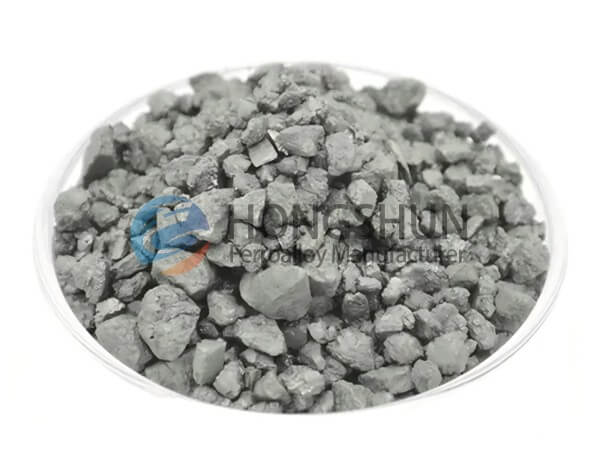
silicon nitride granules

silicon nitride powder
Silicon nitride composition
| Grade | N | Si | Ca min | O min | Cmin | Al min | Fe min |
| Si3N485-99 | 32-39 | 55-60 | 0.25 | 1.5 | 0.3 | 0.5 | 0.25 |
| Specification of silicon nitride | |||||||
Key Properties of Silicon Nitride Powder
Our high-purity silicon nitride powder offers several key advantages, making it a preferred choice for high-performance applications:
- High Purity: Ultra-low impurity levels (below 200 ppm) provide consistent and stable properties, essential for demanding industrial applications.
- High Fracture Strength and Durability: This powder offers excellent wear resistance, low thermal expansion, and high thermal conductivity, ensuring stability even under extreme conditions.
- Corrosion and Oxidation Resistance: Silicon nitride withstands temperatures up to 1900°C and develops a protective oxidation layer over time, preventing further chemical reactions.
HSferroalloy’s High-Quality Silicon Nitride Powder
HSferroalloy’s silicon nitride powder is ideal for use in advanced silicon nitride ceramics due to its high alpha-phase content, narrow particle distribution, and high sintering activity. Key features include:
- High Alpha-Phase Content: Essential for high-density sintering, ensuring optimal strength in final ceramic products.
- Excellent Particle Distribution: Narrow size distribution improves performance and consistency.
- Low Impurities: High purity minimizes defects, enhancing the reliability of Si₃N₄ ceramics.
Applications of Silicon Nitride
Industrial silicon nitride applications:
Due to its unique properties, silicon nitride is widely used in:
1. Steel and Metallurgy
- Protective Coatings: Si₃N₄ coatings protect steel billets from oxidation during heat treatment, reducing oxidation loss by up to 90%.
- Refractories and Taphole Clays: Used in blast furnace linings, Si₃N₄ improves stability and prevents cracking.
- Silicon Nitride for Steel Manufacturing: As a nitrogen source in steel production, Si₃N₄ is used to produce high-strength rebar for construction.
2. High-Temperature Ceramics and Advanced Components
- Engine Components: Si₃N₄ ceramics withstand high temperatures and reduce friction in reciprocating engine parts, qualifying as high-temperature silicon nitride products.
- Metal-Forming Tools: Common in tooling and dies, such as rollers, crucibles, and extrusion die, for their durability and stability under stress.
3. Mechanical and Chemical Engineering
- Precision Bearings: High-strength silicon nitride is used in ball bearings, rollers, and seals for improved wear resistance.
- Chemical-Resistant Valves and Pumps: In chemical processing, Si₃N₄ provides longevity and reliability in corrosive environments.


Production Process of Silicon Nitride
Silicon nitride products can be classified by production methods, including reaction sintering, hot pressing, pressureless sintering, isostatic pressing, and reaction rebonding. Among these, reaction sintering is the most widely used method for producing silicon nitride refractory materials due to its efficiency and cost-effectiveness.
1. Reaction Sintering Process
The reaction sintering method involves finely milling silicon powder (typically less than 80μm in particle size) and forming it into a compact shape using mechanical or isostatic pressing. The green body is then dried and heated in a nitrogen atmosphere at temperatures ranging from 1350°C to 1400°C. During this high-temperature process, sintering and nitriding occur simultaneously, yielding a dense and durable silicon nitride structure.
This method’s effectiveness relies heavily on precise control over raw material purity, sintering conditions, and atmospheric stability to achieve high-quality products with optimal performance characteristics.
2. Influence of Impurities and Additives
The presence of impurities such as Fe, Ca, Al, and Ti in silicon powder can greatly impact product quality. For example:
- Iron (Fe): Often regarded as a catalytic agent in the reaction process, Fe promotes silicon diffusion, but excessive Fe can lead to porosity and structural weaknesses. In controlled amounts (typically 0-5%), Fe can facilitate the formation of a SiO₂ oxide film on the surface, improving corrosion resistance. Fe also interacts with silicon to form a FeSi₂ melt phase, which absorbs nitrogen and promotes the formation of β-Si₃N₄. However, overly large or abundant Fe particles may create porosity, diminishing the final product’s mechanical strength.
- Al, Ca, and Ti: These elements form eutectic systems with silicon, which can enhance sintering. By reducing sintering temperature and promoting densification, small amounts of these impurities can improve the product’s overall strength and stability.
3. Impact of Silicon Particle Size
Finer silicon particles possess a larger specific surface area, enabling sintering at lower temperatures. This feature is advantageous as it increases the α-Si₃N₄ content, contributing to the stability of the final product. Moreover, reducing the particle size minimizes the formation of micro-pores, enhancing the density and mechanical integrity of silicon nitride products. Proper control of particle size distribution can thus greatly improve product quality, balancing porosity and density to meet specific performance needs.
4. Temperature and Nitriding Rate
Temperature control is essential for efficient nitriding. Nitriding typically begins at 970-1000°C, with reaction speed increasing significantly around 1250°C. However, exceeding the melting point of silicon (1420°C) too quickly can lead to uncontrolled melting due to the exothermic reaction, causing the silicon to flow and potentially collapse the powdered form. Thus, controlled heating rates are critical to maintain the structure and avoid defects in the final product.
By carefully managing these parameters, HSferroalloy’s silicon nitride products achieve consistent quality and performance, ideal for applications that demand high durability, corrosion resistance, and thermal stability.
one-stop service


Why Choose HSferroalloy’s Silicon Nitride Powder?
Contact Us for High-Quality Silicon Nitride Powder
For more information on our high-purity silicon nitride powder, customizations, and competitive pricing, contact HSferroalloy today. Discover how our high-performance Si₃N₄ powder can enhance your industrial processes.
- Ultra-High Purity: Our Si₃N₄ powder meets rigorous quality standards, ensuring consistent performance in high-demand applications.
- Customizable Particle Size Options: Available in various sizes for specific requirements in ceramics and refractory products.
- Proven Performance: All products are thoroughly tested to ensure they meet the highest standards for advanced industrial uses.


