
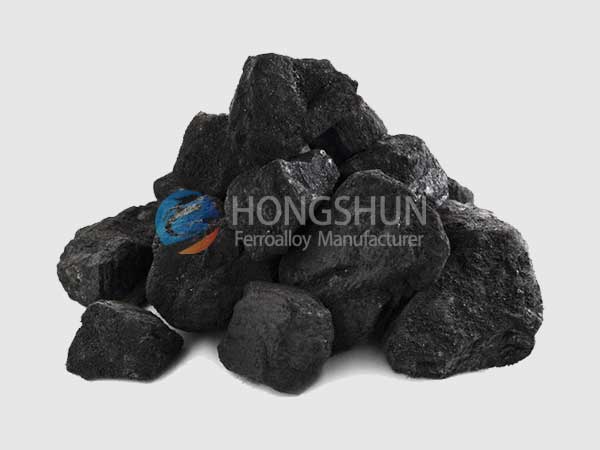
Semi coke, also known as orchid charcoal, coke powder, is the use of clean coal block fired. As a new type of carbon material, with its high fixed carbon and high chemical activity, it is widely used in the production of calcium carbide, ferroalloy and other products to gradually replace metallurgical coke, and becomes an irreplaceable carbon material.
Quality standard of semi coke
Fixed carbon >82%, volatile content <4%, ash <6%, sulfur <0.3%, water <; 10%, specific resistance >3500μΩM, particle size: 15-25mm, maximum not more than 30mm
semi-coke can replace coke (metallurgical coke) and is widely used in chemical industry, smelting, gas production and other industries. It is superior to coke in the production of high energy-consuming products such as metallic silicon, ferroalloys, ferrosilicon, silicomanganese, fertilizers, and calcium carbide.
By modifying semi-coke or adding grinding aids, the grindability coefficient can be equivalent to that of mixed injection coal, and the fuel reactivity, gasification performance, and combustion performance are significantly better than the clean raw materials of mixed injection coal. It is widely used in blast furnace ironmaking and sintering processes to promote the green transformation of steel companies.
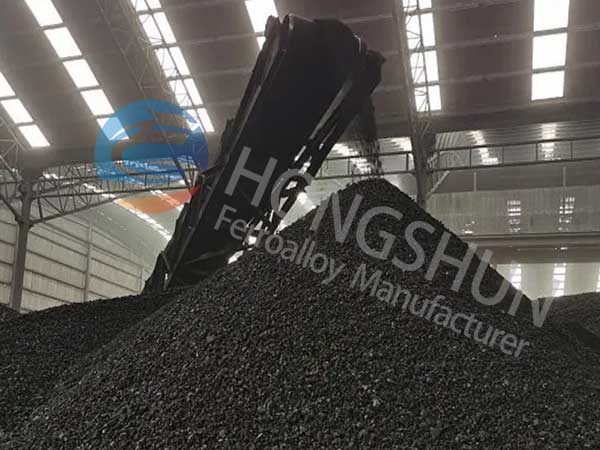


Application fields of semi coke
Clean fuel
Domestic fuel
The pollutant content of semi coke is only one-fifth of that of raw coal, especially the sulfur content is only one-tenth of that of raw coal. It is a suitable clean fuel for civilian use and can replace anthracite coal for civilian use in small and medium-sized cities and rural areas.
boiler fuel
semi coke has low volatile content, generally 5 to 7%, with a maximum of 10%. It also has the characteristics of low sulfur, low phosphorus, and high calorific value. From the perspective of being beneficial to combustion and environmental protection, and based on existing test data, it is completely feasible to use boilers to burn semi coke.
Chemical industry
Calcium carbide reducing agent
Thanks to low ash, low aluminum, low phosphorus and high resistivity, semi coke can significantly reduce energy consumption, reduce costs and improve product quality when used in the calcium carbide industry.
Fertilizer gas-making raw materials
Low-ash, low-sulfur semi coke is used to make gas from chemical fertilizers, which can increase the gas production rate, reduce ash and slag emissions, and reduce the amount of gas desulfurization, thereby reducing energy consumption and improving gas quality.
Gasification to Syngas
Compared with direct gasification of low-grade bituminous coal, semi coke gasification reduces the tar content in the syngas, increases the effective gas content, and reduces the burden on the gas purification unit. The material is less likely to stick into lumps. semi coke has potential as a gasification raw material. The market is huge.
Metallurgy
Iron alloy reducing agent
Compared with metallurgical coke, using semi coke to produce ferroalloys can reduce power consumption by 10%, save 300 to 500 degrees of electricity per ton, save 70 to 90 kilograms of coke, and increase the output of a single furnace by more than 10%. Since the 1990s, ferroalloy production has basically used semi coke and metallurgical coke as reducing agents.
Blast furnace injection materials
Many steel companies such as Baotou Steel, Shougang, Baosteel, and Anshan Iron and Steel have conducted tests on semi coke replacing anthracite as blast furnace injection materials. Tests have shown that semi coke is superior to currently used blast furnace pulverized coal, and it is technically feasible to prepare semi coke powder. At the same time, it is also feasible to inject semi coke powder at a ratio of 15% to 30%.


Why choose us


one-stop service


How to manufacture semi coke?
- Coal washing system: The raw coal is fed into the coal hopper and enters the raw coal belt, which transports the raw coal to the washing workshop and enters the jigging machine for sorting. The sorted clean coal products are dehydrated through a linear vibrating screen, and after dehydration, they enter the clean coal belt and are sent to the next coal preparation system. The filtered water enters the high-frequency screen for dehydration, and the dehydrated product is transported to the foam coal site using a foam coal conveyor belt. The filtered water from the high-frequency screen is pumped into the high-efficiency deep cone concentration tank. The coal slurry flowing out from the bottom of the deep cone thickener is filtered and dehydrated by a filter press. The overflow from the concentration tank and the filtrate from the filter press are mixed into the circulating water tank for reuse. Jig gangue is removed from the gangue chute after being dehydrated and lifted by the bucket. The jigging of middling coal goes to the chute of middling coal after being dewatered and lifted by the bucket, and then enters the washing cycle again.
- Coal preparation system: The raw coal used for the production of semi coke is a mixed coal of 0-30mm, with a total moisture content (including internal and external moisture) not exceeding 13%, and a particle size distribution of less than 6mm for fine coal is less than 10%. The mixed coal is transported to the coal storage bin using a lifting belt.
- Drying system: The mixed coal sent from the coal preparation process is transported to the top coal storage bin of the dry distillation furnace by a lifting belt conveyor. A reciprocating loose coal leveling machine is installed in the coal storage bin, so that the mixed coal transported by the belt conveyor to the coal storage bin can be evenly laid inside the coal storage bin. The mixed coal sent into the coal storage bin moves parallel and vertically downwards, first entering the drying section of the dry distillation furnace. In the drying section, coal gas is used as fuel, and the high-temperature flue gas generated by combustion in the burner is mixed with the circulating dust removal flue gas to 350 ℃ as the heat source for drying the mixed coal. The temperature of the flue gas generated during the drying process is 120 ℃. Due to the entrainment of the airflow, the flue gas contains coal dust of less than 0.2mm. Then, the dust containing flue gas is sent to the bag filter. After removing the dust, a portion of the flue gas is pressurized by a circulating flue gas fan and reused, while another portion is sent outside the boundary for desulfurization treatment and discharged at high altitude.
- Dry distillation system: The temperature of the mixed coal coming out of the drying section rises to 150 ℃, and its free water has been removed. The dehydrated mixed coal moves parallel and vertically downwards into the dry distillation section of the dry distillation furnace. There is a gas collection hood for recovering pyrolysis oil and gas in the upper part of the dry distillation section of the dry distillation furnace, a distributor in the middle to increase the permeability of the mixed coal, and 12 carbonization chambers in the lower part. Two stage burners are installed in the carbonization chamber to heat the mixed coal through lean oxygen combustion. The thermal carrier gas generated by lean oxygen combustion passes through the coal seam gap and contacts the vertically moving coal mixture for heat exchange. The heated coal mixture undergoes thermal decomposition reaction, and the pyrolysis oil and gas and thermal carrier gas go up and enter the oil and gas cyclone dust collector through the gas collection hood. After dust removal, the pyrolysis oil and gas are sent to the oil and gas recovery device. The mixed coal in the dry distillation section of the dry distillation furnace moves from top to bottom and comes into reverse contact with the high-temperature gas fed into the combustion chamber. The mixed coal is heated to 600-700 ℃ in this section and then carbonized into semi coke, which enters the cooling section from the carbonization chamber.
- Cooling system: The high-temperature semi coke discharged from the carbonization chamber enters the waste heat recovery heat exchanger. In the heat exchanger, water is vaporized into steam, and then the steam enters the vapor-liquid separator, where 0.7MPa (G) saturated steam is separated. Except for some preheating, the rest is sent out of the device.
- Quenching system: After being treated with a heat exchanger for waste heat recovery of high-temperature sei coke, the temperature of semi coke can be reduced from 650 ℃ to around 200 ℃. At the bottom of the cooling section of the dry distillation furnace, a water mist spray quenching device is installed. When the spray water mist comes into contact with the hot semi coke, the rapid expansion force of the water turning into steam causes the steam to flow through the semi coke layer. Using steam to extinguish the coke in the silo reduces the contact time and water consumption between water and semi coke. The semi coke is finally pushed back and forth by the pushing coke machine and falls to the bottom scraper. The scraper scrapes out the bottom of the furnace, and after being weighed and measured by the weighing belt, it is transported to the product warehouse by a belt conveyor.


