
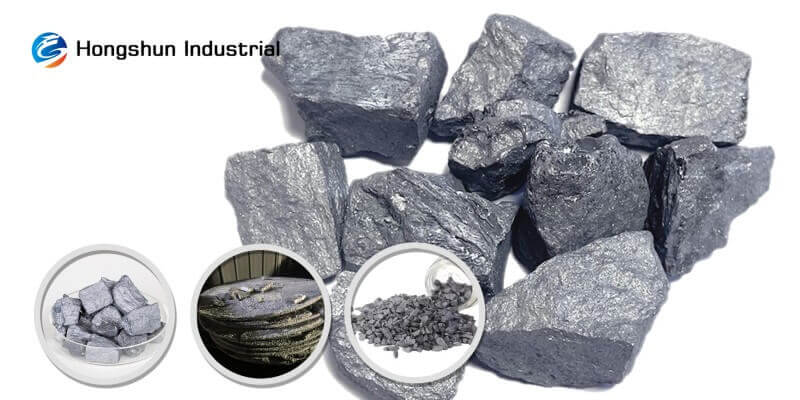

Ductile iron is widely used for automotive components, pipes, valves, gears, machine parts and other castings that require a good combination of strength, toughness and machinability. One of the most important materials used during ductile iron production is FeSiMg nodulizer.
FeSiMg, short for ferrosilicon magnesium, is a treatment alloy added to molten cast iron to promote the formation of spheroidal graphite. The treatment changes the graphite morphology from flakes into compact nodules, which significantly improves the mechanical properties of the finished casting.
For foundries, choosing the right FeSiMg nodulizer for ductile iron is not simply a matter of magnesium content. Magnesium recovery, silicon level, rare earth content, particle size, treatment method and the chemistry of the base iron all need to be considered.
This article explains the composition, uses, treatment process and main benefits of FeSiMg nodulizer, as well as the key points buyers should consider when selecting a supplier.
What Is FeSiMg Nodulizer?
FeSiMg nodulizer is a ferrosilicon-based alloy containing magnesium and, depending on the grade, small amounts of rare earth elements and other alloying elements.
It is mainly used in the production of ductile cast iron. When FeSiMg is added to molten iron, magnesium reacts with active elements in the melt and modifies the graphite formation process. Under suitable chemical and thermal conditions, the graphite can develop into relatively spherical or nodular particles instead of elongated flakes.
The basic structure of a FeSiMg alloy normally consists of:
- Silicon (Si)
- Magnesium (Mg)
- Iron (Fe)
- Rare earth elements (RE), when required
- Calcium (Ca)
- Aluminum (Al)
- Other minor elements depending on the grade
The exact composition varies according to the casting process and the requirements of the foundry.


FeSiMg Nodulizer Composition
There is no single universal FeSiMg composition for every ductile iron application. Different foundries use different grades depending on their base iron chemistry, treatment method and required nodularity.
Common commercial grades include FeSiMg 3-8, FeSiMg 5-8 and FeSiMg 7-8, where the number generally indicates the approximate magnesium range or grade designation used by the supplier.
A typical FeSiMg nodulizer may contain:
| Element | Typical Range |
|---|---|
| Mg | 3–8% |
| Si | 40–50% |
| RE | 0–5% |
| Ca | Controlled according to grade |
| Al | Controlled according to grade |
| Fe | Balance |
These figures are representative rather than a universal standard. Buyers should always check the supplier’s technical specification and certificate of analysis before placing an order.
Why Is Magnesium Important?
Magnesium is the key active element in the nodularization process. It changes the surface condition of the molten iron and promotes the formation of spheroidal graphite.
However, adding more magnesium does not automatically produce better ductile iron. Excessive magnesium can increase reaction intensity, generate more slag and potentially increase production losses.
For this reason, foundries generally select a magnesium content that matches the treatment method and target recovery rate.
Role of Silicon
Silicon is the main base component of ferrosilicon magnesium alloy. It also contributes to the overall metallurgical condition of the treated iron.
The silicon content of the nodulizer needs to be considered together with the silicon already present in the base iron. This helps the foundry control the final chemical composition of the ductile iron.
Role of Rare Earth Elements
Rare earth elements can be included in FeSiMg nodulizer to improve the treatment of certain types of base iron.
RE-containing nodulizers can be particularly useful when the iron contains undesirable trace elements or when specific graphite morphology and nodule quality are required.
The appropriate RE level depends on the raw materials, furnace practice and casting requirements. It is therefore better to select the grade according to actual foundry conditions rather than simply choosing the highest RE content.
How FeSiMg Nodulizer Works in Ductile Iron
The production of ductile iron generally involves several stages, including melting, chemical adjustment, magnesium treatment, inoculation and casting.
During the nodularization treatment, FeSiMg is brought into contact with molten iron. Magnesium reacts rapidly with the melt, and the treatment modifies the conditions under which graphite forms during solidification.
The simplified process can be understood as:
Molten base iron → FeSiMg treatment → Magnesium reaction → Graphite modification → Spheroidal graphite formation → Ductile iron casting
Because magnesium has a high vapor pressure at the temperature of molten iron, the reaction can be quite vigorous. The treatment method therefore has a direct effect on magnesium recovery and process stability.
Common FeSiMg Treatment Methods
FeSiMg nodulizer can be used with several treatment methods.
1. Ladle Treatment
Ladle treatment is one of the traditional methods used by foundries.
The required amount of FeSiMg is placed in the treatment ladle, followed by the addition of molten iron. The alloy reacts with the iron and releases magnesium.
This method is relatively simple and is suitable for many small and medium-sized foundries. However, reaction control and magnesium recovery need to be carefully managed.
2. Sandwich Method
The sandwich method is a modified ladle treatment process. FeSiMg is placed at the bottom of the treatment ladle and covered with steel or another suitable material before molten iron is added.
The covering material delays the reaction between the nodulizer and molten iron. This can reduce the initial reaction intensity and improve magnesium recovery.
The method is widely used because it is relatively simple and does not require highly complicated equipment.
3. Cored Wire Treatment
For larger foundries or applications requiring more precise treatment control, FeSiMg can also be introduced through a cored wire system.
The FeSiMg alloy is enclosed inside a steel strip to form FeSiMg cored wire. The wire feeder controls the addition rate and treatment depth.
Compared with conventional ladle treatment, cored wire treatment can offer better control of:
- Magnesium addition
- Treatment time
- Magnesium recovery
- Reaction intensity
- Treatment consistency
The most suitable treatment method depends on production volume, equipment, casting size and process requirements.
Main Uses of FeSiMg Nodulizer
After magnesium treatment, inoculation is another important step in ductile iron production. Ferro silicon-based inoculants can help control graphite nucleation and improve the consistency of graphite morphology. The choice of inoculant should be matched with the base iron chemistry, treatment process and casting requirements. The primary application of FeSiMg is the production of ductile iron.
It is commonly used for:
Automotive Castings
Ductile iron is used for various automotive components because of its high strength and good fatigue resistance. FeSiMg treatment helps produce the required graphite morphology and mechanical properties.
Ductile Iron Pipes
Ductile iron pipes require reliable mechanical performance and good casting quality. Proper nodularization is essential for achieving consistent graphite morphology throughout the casting.
Valves and Pumps
Industrial valves, pump bodies and related components often use ductile iron because it provides a good balance between strength, wear resistance and machinability.
Gears and Machine Components
FeSiMg-treated ductile iron can be used for gears, brackets, housings and other engineering components where improved mechanical performance is required.
Benefits of Using FeSiMg Nodulizer
The correct use of FeSiMg can provide several advantages in ductile iron production.
1. Promotes Spheroidal Graphite
The most important function of FeSiMg is to promote the formation of spheroidal graphite. Compared with flake graphite, nodular graphite causes less stress concentration in the metal matrix.
This is one of the main reasons ductile iron can achieve much higher mechanical performance than conventional gray cast iron.
2. Improves Mechanical Properties
A properly controlled nodularization treatment can contribute to improved:
- Tensile strength
- Yield strength
- Elongation
- Impact resistance
- Fatigue performance
The final properties still depend on matrix structure, carbon equivalent, inoculation, cooling conditions and heat treatment.
3. Supports Stable Casting Quality
Consistent FeSiMg composition and particle size can help foundries maintain more stable treatment results.
For production lines making large quantities of ductile iron castings, consistency is particularly important because fluctuations in magnesium recovery can affect graphite morphology and mechanical properties.
4. Flexible Grade Selection
FeSiMg nodulizer is available in different magnesium levels, rare earth contents and particle sizes.
This allows foundries to select a grade according to their individual process rather than using the same treatment alloy for every casting.
How to Choose the Right FeSiMg Nodulizer
When purchasing FeSiMg for ductile iron production, magnesium content should not be the only selection criterion.
Consider the Magnesium Content
Common grades such as FeSiMg 5-8 and FeSiMg 7-8 can be selected according to the required treatment addition and expected magnesium recovery.
A higher Mg content may reduce the required addition weight, but it may also produce a more intense reaction. The best choice depends on the treatment process.
Check the Particle Size
FeSiMg nodulizer is normally supplied in specific particle sizes suitable for the treatment method.
Common sizes include ranges such as 5-25 mm and 5-30 mm, although other sizes can be supplied according to customer requirements.
Particle size affects the reaction rate and should therefore match the treatment process.
Consider RE and Other Elements
The rare earth content, calcium, aluminum and other minor elements can influence treatment performance.
Foundries should choose the composition based on the base iron chemistry and actual casting requirements rather than selecting a grade solely by its Mg percentage.
Request a Certificate of Analysis
For industrial purchasing, it is advisable to request a complete chemical analysis before confirming an order.
The certificate should clearly indicate the actual contents of Mg, Si, RE and relevant impurity elements. Consistent batch quality is especially important for foundries operating continuous or high-volume production.
FeSiMg Nodulizer from a Reliable Supplier
For ductile iron foundries, the quality of the nodulizer directly affects the stability of the treatment process. A reliable supplier should therefore provide not only competitive pricing but also consistent chemical composition, stable particle size and dependable delivery.
Hongshun supplies FeSiMg nodulizer for ductile iron foundries, with commonly used magnesium grades including Mg 3-8%, 5-8% and 7-8%. Particle sizes such as 5-25 mm and 5-30 mm can be supplied, while customized specifications are available according to the customer’s treatment process.
Quality inspection and third-party testing can also be arranged when required, including SGS, BV or CCIC inspection.
For buyers sourcing FeSiMg from China, it is important to discuss the following information with the supplier before ordering:
- Target Mg content
- Si content
- RE requirement
- Ca and Al limits
- Particle size
- Treatment method
- Packaging requirements
- Trial order quantity
- Inspection and testing requirements
Providing these details allows the supplier to recommend a more suitable FeSiMg grade instead of offering a standard composition that may not match the foundry’s process.
Conclusion
FeSiMg nodulizer for ductile iron is an essential treatment alloy for producing spheroidal graphite cast iron. Its main function is to introduce magnesium into molten iron and create the metallurgical conditions required for nodular graphite formation.
The performance of FeSiMg depends on more than its nominal magnesium content. Chemical composition, magnesium recovery, particle size, treatment method, base iron chemistry and process control all influence the final result.
For foundries, selecting a consistent FeSiMg grade and working with a manufacturer that can provide stable composition and customized specifications can help improve treatment efficiency and casting quality.
If you are sourcing FeSiMg nodulizer, FeSiMg 5-8, FeSiMg 7-8 or other ferrosilicon magnesium alloys, providing your required chemical composition, particle size and treatment method is the best way to obtain a suitable quotation and product recommendation.

